- Published on
Is Kombucha Haram? The Islamic Ruling on Fermented Tea
- Authors

- Name
- Sih C.
- Role
- Founder & Islamic Content Researcher • Islamful
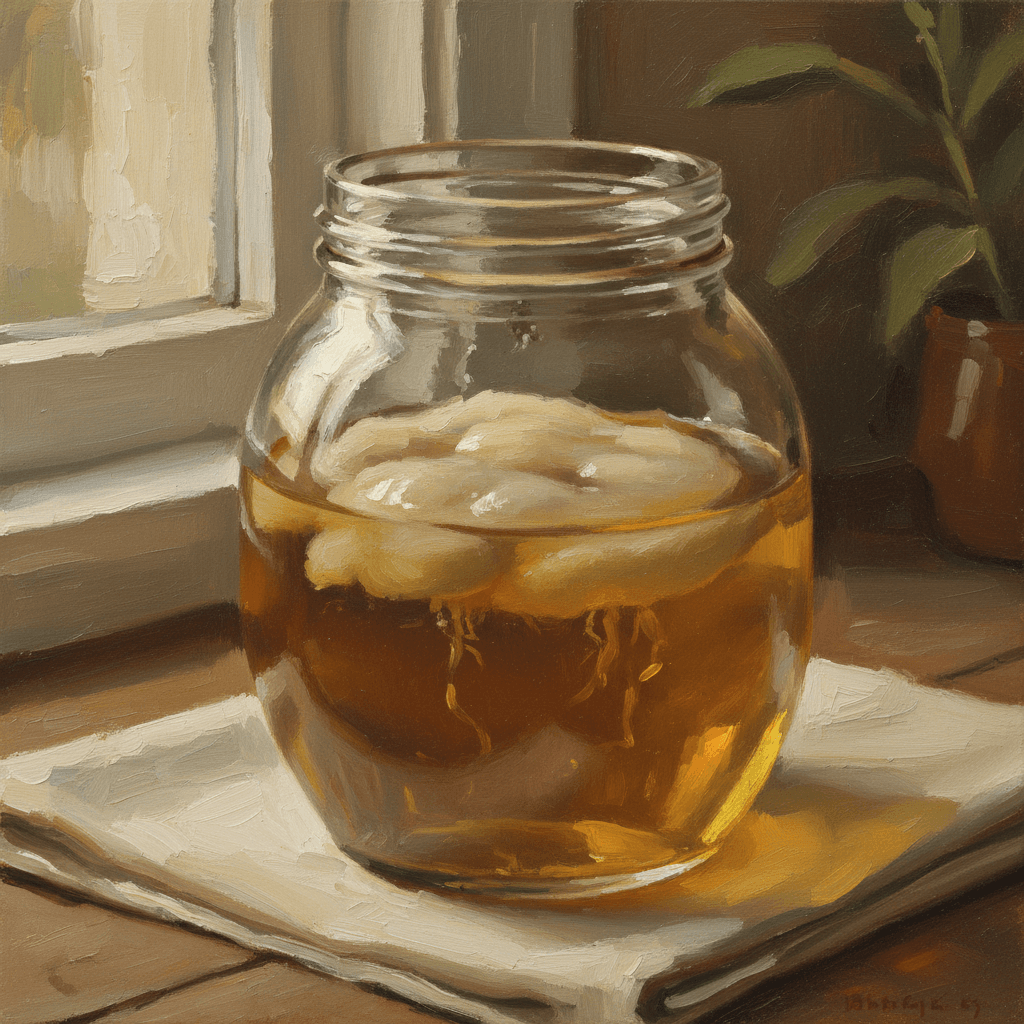
Kombucha has become one of the most popular health drinks worldwide, praised for its probiotics and gut health benefits. But for Muslims, the question is straightforward: kombucha is a fermented drink that contains alcohol. That fact alone makes the ruling worth understanding carefully.
The answer is not as simple as a blanket yes or no. It depends on the alcohol content, the type of kombucha, and which scholarly opinion you follow.
Quick Answer: Kombucha that contains enough alcohol to intoxicate in large quantities is haram by scholarly consensus. Commercial kombucha with trace alcohol (under 0.5% ABV) is debated — some scholars permit it based on the same reasoning applied to vinegar and bread, while others prohibit it as a precaution. Home-brewed kombucha is riskier due to unpredictable alcohol levels.
Want to check if a specific drink or ingredient is halal? Use our Haram Checker for an instant ruling.
The Evidence from Quran and Sunnah
The core issue with kombucha is its alcohol content, and the Islamic prohibition of intoxicants is explicit. Allah says:
يَا أَيُّهَا الَّذِينَ آمَنُوا إِنَّمَا الْخَمْرُ وَالْمَيْسِرُ وَالْأَنصَابُ وَالْأَزْلَامُ رِجْسٌ مِّنْ عَمَلِ الشَّيْطَانِ فَاجْتَنِبُوهُ لَعَلَّكُمْ تُفْلِحُونَ
Yā ayyuhā alladhīna āmanū innamā al-khamru wal-maysiru wal-ansābu wal-azlāmu rijsun min ʿamali al-shayṭāni fajtanibūhu laʿallakum tufliḥūn
"O you who believe, intoxicants, gambling, stone altars, and divining arrows are but defilement from the work of Satan, so avoid it that you may be successful." (Surah Al-Ma'idah, 5:90)
The word الْخَمْرُ (al-khamr) linguistically means "that which covers the intellect." Scholars have consistently understood this to include all intoxicating substances, not just grape wine. Kombucha, as a fermented beverage that produces ethanol, falls within the scope of this discussion.
The Prophet ﷺ further clarified:
"Whatever intoxicates in large amounts, a small amount of it is also haram." (Narrated by Abu Dawud, 3681; Ibn Majah, 3392)
This hadith is critical for the kombucha question. If a drink can intoxicate when consumed in large quantities, then even a single glass of it is haram — regardless of how little alcohol a normal serving contains.
However, there is another principle the scholars consider. The Prophet ﷺ said about vinegar:
"What an excellent condiment vinegar is." (Narrated by Muslim, 2052)
Vinegar is produced through fermentation and contains trace amounts of alcohol, yet the Prophet ﷺ approved it. This establishes that not every substance containing trace alcohol is automatically haram. The question becomes: where does kombucha fall on this spectrum?
For a full treatment of the alcohol prohibition, see our detailed guide on is alcohol haram.
Scholar Opinions
The majority position: kombucha is haram or at minimum doubtful
Most contemporary scholars and fatwa bodies advise Muslims to avoid kombucha. Their reasoning is straightforward:
- Kombucha is intentionally fermented, producing alcohol as a known byproduct
- Some commercial varieties contain alcohol levels between 0.5% and 3% ABV — enough to intoxicate if consumed in very large amounts
- The Prophet ﷺ said that whatever intoxicates in large amounts is haram in small amounts
- Even "low-alcohol" kombucha has variable and often imprecise alcohol levels
The Islamic Food and Nutrition Council of America (IFANCA) and many halal certification bodies do not certify kombucha due to its alcohol content and fermentation variability.
The minority position: trace-alcohol kombucha is permissible
Some scholars — particularly those who follow the Hanafi approach to naturally fermented beverages — argue that commercial kombucha under 0.5% ABV may be permissible. Their reasoning:
- Vinegar, bread, soy sauce, and ripe fruit all contain trace alcohol from natural fermentation and are universally considered halal
- The intent behind kombucha production is health, not intoxication
- At 0.5% ABV or below, a person physically cannot consume enough kombucha to become intoxicated before the body metabolizes the alcohol
- The principle of istihlak (negligible quantity absorbed into a larger whole) may apply
This is a minority but not baseless position. It follows the same logic scholars apply to gelatin and other processed ingredients where the original substance is debated.
Summary of positions
| Kombucha Type | Alcohol Content | Majority Ruling | Minority Ruling |
|---|---|---|---|
| Home-brewed | 1-3%+ (variable) | Haram | Haram |
| Commercial (standard) | 0.5-3% ABV | Haram | Haram/Doubtful |
| Commercial (low-alcohol) | Under 0.5% ABV | Doubtful — avoid | Permissible |
Conditions and Gray Areas
Home-brewed kombucha presents the greatest concern. The fermentation process is difficult to control at home, and alcohol levels can climb well above 1-2% without the brewer realizing it. Even scholars who are lenient on commercial low-alcohol kombucha advise against home-brewed versions because you cannot verify the alcohol content.
Kombucha that has been sitting on the shelf is another issue. Fermentation continues inside the bottle, especially if it is not properly refrigerated. A kombucha that was 0.3% ABV at bottling could be significantly higher by the time you drink it.
"Hard kombucha" — kombucha brands marketed with 4-7% ABV — is unambiguously haram. There is no scholarly disagreement on this. It is an alcoholic beverage by any definition.
The principle of precaution (wara') applies strongly here. The Prophet ﷺ said: "Leave that which makes you doubt for that which does not make you doubt." (Narrated by Al-Tirmidhi, 2518). When a permissible alternative exists — and there are many probiotic-rich foods like yogurt, kefir from halal sources, and pickled vegetables — choosing the doubtful option is unnecessary. For another perspective on a popular beverage and its Islamic ruling, see our article on is coffee haram.
Common Questions
Can I drink kombucha for health benefits?
The health benefits of kombucha (probiotics, gut health) are available through clearly halal alternatives. Yogurt, fermented pickles, and halal-certified probiotic supplements provide the same benefits without the alcohol question. If you are specifically drawn to kombucha for health reasons, the safer path is to choose alternatives. Some Muslims also ask about CBD for health purposes — the same principle of caution applies when a substance's permissibility is debated.
Is kombucha the same as vinegar in Islamic law?
No. Vinegar has undergone a complete transformation — the alcohol has converted to acetic acid, and the resulting product cannot intoxicate under any circumstances. Kombucha still contains active alcohol. The two are not equivalent, even though both involve fermentation. This distinction is important for related rulings — see halal vs haram for more on how scholars classify substances.
What about kombucha-flavored products?
Products flavored to taste like kombucha but not actually fermented (kombucha-flavored sodas, for example) do not contain alcohol from fermentation and are permissible. Always check the label to confirm.
Summary
The ruling on kombucha depends on its alcohol content. Hard kombucha and home-brewed kombucha with uncontrolled alcohol levels are haram — there is no real disagreement on this. Commercial kombucha with very low alcohol (under 0.5% ABV) is where scholars differ: the majority advise avoidance, while a minority consider it permissible based on the same principles applied to vinegar and bread.
Given the availability of halal probiotic alternatives and the difficulty of verifying exact alcohol levels in kombucha, the cautious path is to avoid it. When something is doubtful, the believer who leaves it protects both their religion and their peace of mind.
Allah knows best. والله أعلم
Islamic Ruling Checker
Check the ruling on anything — food, activities, lifestyle, and more
Frequently Asked Questions
Is kombucha haram in Islam?
Most scholars consider kombucha haram if it contains enough alcohol to intoxicate when consumed in large quantities. Commercial kombucha with less than 0.5% ABV is debated — some scholars permit it based on the principle that trace amounts of naturally occurring alcohol (as in vinegar and bread) are permissible, while others prohibit it as a precaution.
Does kombucha contain alcohol?
Yes. Kombucha is a fermented drink and naturally produces alcohol as a byproduct. Commercial kombucha typically contains 0.5% ABV or less, though some brands reach 1-3%. Home-brewed kombucha can have even higher and less predictable alcohol levels.
Is non-alcoholic kombucha halal?
Kombucha marketed as non-alcoholic (under 0.5% ABV) is considered permissible by some scholars who apply the same reasoning used for vinegar, bread, and ripe fruit — all of which contain trace alcohol from natural fermentation. However, stricter scholars advise avoiding it entirely due to the fermentation process and the difficulty of verifying exact alcohol content.