- Published on
Is CBD Haram? The Islamic Ruling on Cannabidiol
- Authors

- Name
- Sih C.
- Role
- Founder & Islamic Content Researcher • Islamful
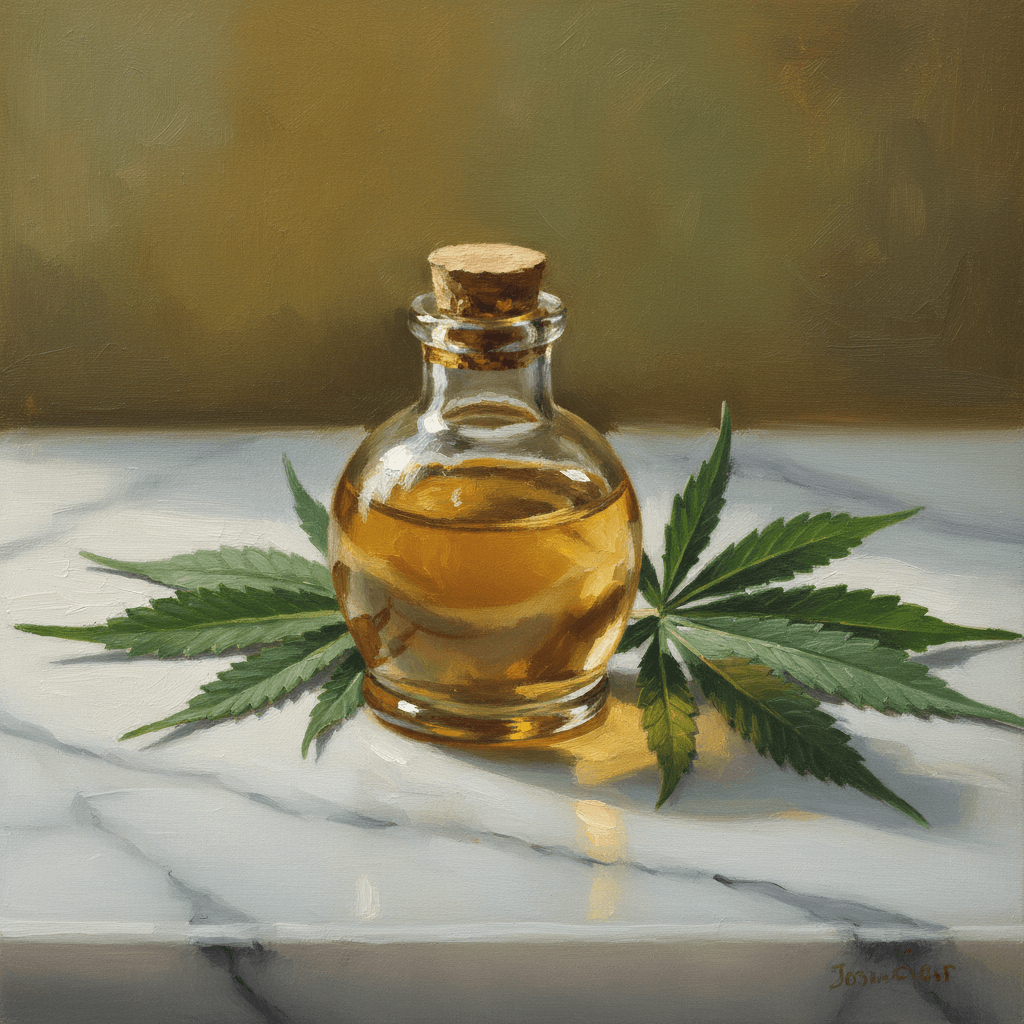
The ruling on CBD depends entirely on what is in the product. Pure CBD (cannabidiol) that does not intoxicate and contains zero THC is considered permissible by many contemporary scholars, particularly for medical use. CBD products that contain THC — even trace amounts — are haram, because THC is an intoxicant and Islam prohibits all intoxicants without exception.
This distinction matters because most CBD products on the market are not pure. Full-spectrum CBD oils commonly contain up to 0.3% THC, which is enough to trigger the prophetic prohibition. For the broader framework on what makes something halal or haram, see the halal vs haram overview.
Quick Answer: Pure, THC-free CBD is permissible according to many scholars, especially for medical purposes. CBD products containing any THC are haram because THC is an intoxicant. Always verify the product is certified THC-free before using it. Not sure about a specific product? Check it with the haram checker.
The Evidence
The central Islamic principle governing CBD is the prohibition of intoxicants. The Quran is explicit:
يَا أَيُّهَا الَّذِينَ آمَنُوا إِنَّمَا الْخَمْرُ وَالْمَيْسِرُ وَالْأَنصَابُ وَالْأَزْلَامُ رِجْسٌ مِّنْ عَمَلِ الشَّيْطَانِ فَاجْتَنِبُوهُ
Ya ayyuha alladhina amanu innama al-khamru wa al-maysiru wa al-ansabu wa al-azlamu rijsun min 'amali al-shaytani fa-ijtanibuhu
"O you who believe, intoxicants, gambling, stone altars, and divining arrows are but defilement from the work of Satan, so avoid them."
Source: Surah Al-Ma'idah, 5:90
The Prophet Muhammad (peace be upon him) extended this with a critical principle:
كُلُّ مُسْكِرٍ خَمْرٌ وَكُلُّ خَمْرٍ حَرَامٌ
Kullu muskirin khamrun wa kullu khamrin haram
"Every intoxicant is khamr, and every khamr is haram."
Source: Narrated by Muslim, 2003
And the hadith that directly addresses the dosage question:
مَا أَسْكَرَ كَثِيرُهُ فَقَلِيلُهُ حَرَامٌ
Ma askara kathiruhu fa qaliluhu haram
"Whatever intoxicates in large amounts, a small amount of it is haram."
Source: Narrated by Abu Dawud, 3681
This last hadith is critical for the CBD discussion. THC intoxicates in large amounts — therefore even trace amounts of THC in a CBD product fall under this prohibition. CBD itself, however, does not cause intoxication. It is not khamr. It does not produce the "high" associated with cannabis. This is why the scholarly analysis separates CBD from THC rather than ruling on cannabis as a single substance.
Scholar Opinions
CBD is a relatively new subject in Islamic jurisprudence. Classical scholars addressed cannabis (hashish) and unanimously prohibited it as an intoxicant. The modern question is whether a non-intoxicating compound extracted from the same plant carries the same ruling.
| Position | Scholars / Institutions | Reasoning |
|---|---|---|
| Pure CBD permissible (for medical use) | Several contemporary fatwa bodies, including some scholars at ECFR | CBD itself is not an intoxicant; medical benefit applies |
| CBD with THC is haram | Consensus among scholars who have addressed it | THC is an intoxicant; the "small amount" hadith applies |
| All cannabis derivatives haram | Some scholars (minority position) | Precautionary principle; derived from a prohibited plant |
The majority position among scholars who have examined the science distinguishes between the compounds. CBD is not THC. They are chemically different substances with different effects on the body. Scholars who understand this distinction generally permit pure CBD while prohibiting THC.
The minority position — that all cannabis derivatives are haram regardless — relies on the precautionary principle (sadd al-dhara'i, blocking the means to harm). These scholars argue that permitting any cannabis-derived product opens the door to abuse. This is a valid juristic methodology, but it is not the majority position when the product in question is genuinely non-intoxicating.
The classical prohibition of hashish is well-established. Ibn Taymiyyah explicitly ruled hashish haram, stating it is worse than alcohol in some respects because it impairs the mind. But his ruling targeted the intoxicating properties of cannabis — the very properties that CBD lacks.
For how Islamic law handles related substances, see is smoking haram and is nicotine haram.
Conditions and Gray Areas
THC content is the dividing line. If a CBD product contains any THC, it is haram. Full-spectrum CBD products typically contain up to 0.3% THC. Broad-spectrum products claim to have THC removed but may still contain trace amounts. CBD isolate — pure cannabidiol with no other cannabis compounds — is the only category that reliably avoids this issue.
Medical necessity (darurah) may apply in limited cases. If a physician prescribes a CBD product containing THC for a serious medical condition, and no THC-free alternative exists, the Islamic principle of necessity may permit it:
الضَّرُورَاتُ تُبِيحُ الْمَحْظُورَاتِ
Al-darurat tubihu al-mahzurat
"Necessities permit what is otherwise prohibited."
This principle has strict conditions: the need must be genuine, no permissible alternative can be available, and the amount used must be limited to what is necessary. It is not a blanket permission to use THC-containing products.
Addiction and habit formation are also relevant. While CBD is not considered physically addictive in the way nicotine is, habitual reliance on any substance for non-medical purposes raises questions under the Islamic principle of avoiding harm to the body.
Common Questions
Q: Is hemp seed oil the same as CBD oil?
No. Hemp seed oil is extracted from the seeds and contains no CBD or THC. It is a food product and is halal. CBD oil is extracted from the flowers and leaves of the hemp plant and contains cannabidiol. These are different products despite both coming from the hemp plant.
Q: Can I use CBD topically (creams, balms)?
Topical CBD products that do not enter the bloodstream in intoxicating amounts are treated differently by some scholars. The prohibition on intoxicants primarily concerns substances that reach the brain and alter mental state. A THC-free CBD cream used for joint pain is generally considered permissible, though scholars recommend verifying the product is genuinely THC-free.
Q: Are CBD gummies or edibles haram?
The same rules apply. If the gummies contain THC, they are haram. If they are made with pure CBD isolate and contain no THC, gelatin sourcing, and other ingredients also need to be halal. Check every ingredient — not just the CBD.
Free Islamic Tools
See all →Summary
The Islamic ruling on CBD comes down to one question: does the product intoxicate or contain an intoxicant?
- Pure CBD (isolate, THC-free) — permissible according to many scholars, especially for medical use
- CBD with any THC content — haram, based on the prophetic principle that what intoxicates in large amounts is forbidden in small amounts
- Medical necessity — the principle of darurah may apply in rare cases where THC-containing medication is prescribed and no alternative exists
- Always verify — check lab reports, look for third-party testing, and confirm zero THC before purchasing any CBD product
The burden is on you to verify what you are putting into your body. The default ruling on substances is permissibility, but that default shifts the moment an intoxicant is present in any amount. For a full treatment of the Islamic prohibition on intoxicants, see our article on is alcohol haram.
You can check specific products and ingredients using our haram checker.
والله أعلم — Allah knows best.
Islamic Ruling Checker
Check the ruling on anything — food, activities, lifestyle, and more
Frequently Asked Questions
Is CBD oil haram in Islam?
Pure CBD oil that contains no THC and does not cause intoxication is considered permissible by many contemporary scholars, especially when used for legitimate medical purposes. However, CBD products containing any amount of THC are haram because THC is an intoxicant.
Is CBD haram if it contains trace amounts of THC?
Yes. Most scholars hold that any product containing THC — even trace amounts — falls under the prophetic prohibition that whatever intoxicates in large amounts is haram in small amounts. THC-free CBD isolate is the safer option.
Can Muslims use CBD for medical treatment?
If a qualified physician prescribes CBD for a genuine medical condition, and the product is THC-free, many scholars consider it permissible. If only THC-containing products are available and medically necessary, the principle of darurah (necessity) may apply, but this requires scholarly consultation.