- Published on
Halal vs Haram: What Every Muslim Needs to Know
- Authors

- Name
- Sih C.
- Role
- Founder & Islamic Content Researcher • Islamful
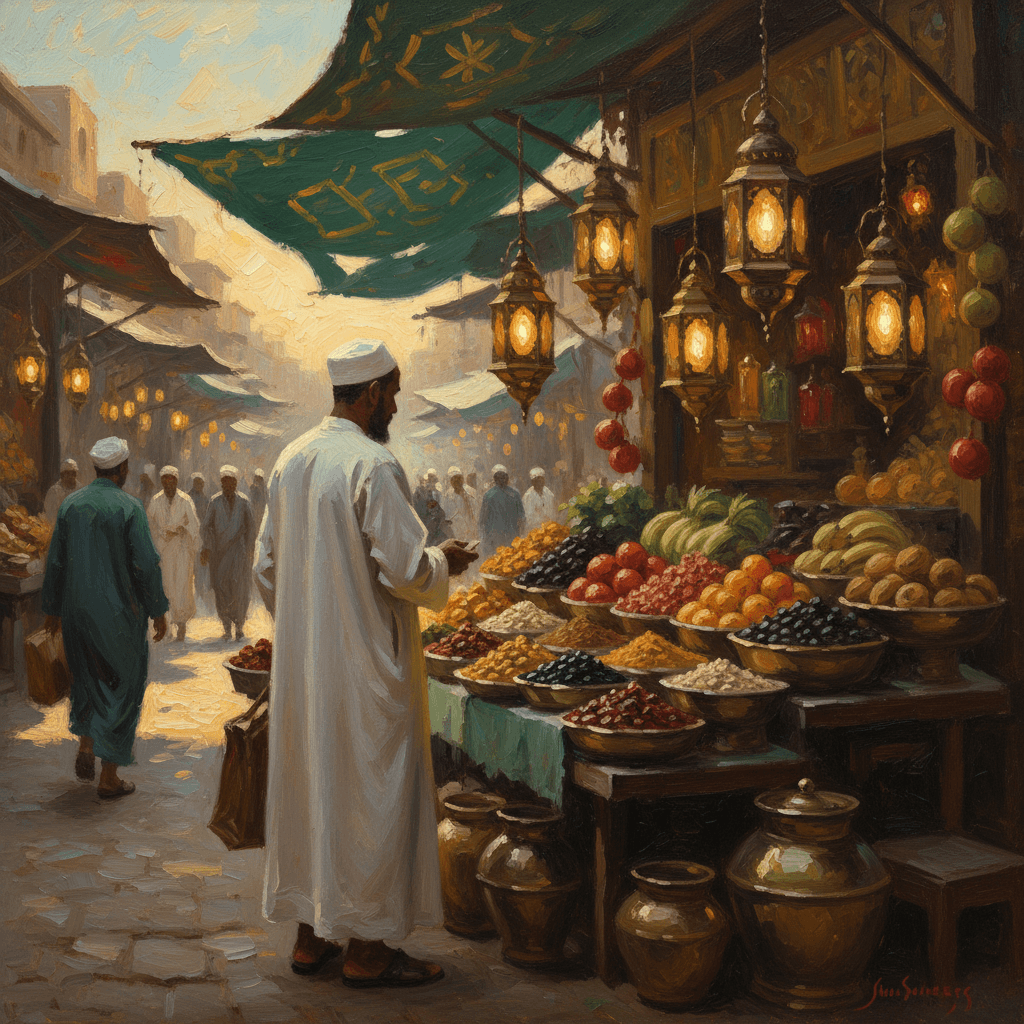
Every decision a Muslim makes — what to eat, how to earn money, how to spend time — sits somewhere on a scale of permissibility. Halal and haram are the two ends of that scale. Understanding the difference between them, and everything in between, is not just academic. It shapes how you live.
This guide covers the definitions, the Quranic and hadith evidence, the intermediate categories most people do not know about, and how Islamic scholars actually determine rulings.
| Category | Halal (Permitted) | Haram (Forbidden) |
|---|---|---|
| Food | Meat slaughtered in Allah's name, vegetables, fruit, seafood | Pork, alcohol, carrion, blood, food dedicated to other than Allah |
| Finance | Trade, profit-sharing (musharaka), ethical investment | Riba (interest), gambling, transactions involving deception |
| Actions | Prayer, marriage, honest business, most daily activities | Adultery, theft, backbiting, deliberately harming others |
What Does Halal Mean?
Halal (حَلَال — halal) means permitted, lawful, or allowed. Anything that Allah (SWT) has not prohibited is, by default, halal.
This is a crucial point that many Muslims overlook. The Quran establishes that permissibility is the original state of all things — prohibition is the exception, not the rule. This means scholars do not need to prove something is halal; they need to find evidence before they can call something haram.
Allah ﷻ says:
قُلْ أَرَأَيْتُم مَّا أَنزَلَ ٱللَّهُ لَكُم مِّن رِّزْقٍۢ فَجَعَلْتُم مِّنْهُ حَرَامًۭا وَحَلَـٰلًا
Qul ara'aytum ma anzala Allahu lakum min rizqin faja'altum minhu haraman wa halala
"Say: Have you seen what Allah has sent down to you of provision, and you have made some of it unlawful and some lawful?" — Surah Yunus, 10:59
The verse rebukes those who invented prohibitions without divine basis. Making something haram that Allah made halal is itself a transgression.
The Spectrum of Islamic Rulings
Islamic jurisprudence does not work in a simple binary. Scholars define five categories of action (al-ahkam al-khamsah):
- Fard / Wajib (Obligatory) — Must be done. Missing it is a sin. Examples: the five daily prayers, fasting in Ramadan, paying zakat.
- Mandub / Mustahabb (Recommended) — Rewarded if done, no sin if left. Examples: voluntary fasting, giving extra charity, using miswak.
- Mubah (Neutral/Permitted) — No reward, no punishment either way. Most daily activities fall here: sleeping, eating permissible food, walking.
- Makruh (Disliked) — Better to avoid, but not sinful. Examples: eating raw garlic before prayer, certain manners of dress.
- Haram (Forbidden) — Doing it is a sin and requires repentance.
The word "halal" in everyday speech covers everything from Fard down to Mubah — anything that is permitted. "Haram" covers the last category only.
Examples of Halal
- Food: Beef, chicken, lamb, fish, vegetables, grains — slaughtered or prepared according to Islamic guidelines
- Finance: Profit-sharing partnerships, honest trade, savings accounts without interest
- Actions: Marriage, raising children, pursuing education, enjoying nature, art without sinful content
What Does Haram Mean?
Haram (حَرَام — haram) means forbidden, prohibited, or unlawful. When something is haram, doing it is a sin for which a person will be accountable on the Day of Judgment — unless they sincerely repent.
Allah ﷻ does not prohibit things arbitrarily. The general principle in Islamic jurisprudence is that prohibitions exist to protect five essential interests: religion (din), life (nafs), intellect (aql), lineage (nasl), and wealth (mal). Things that harm these essentials tend to be haram.
The Quran states this directly regarding some of the clearest prohibitions:
حُرِّمَتْ عَلَيْكُمُ ٱلْمَيْتَةُ وَٱلدَّمُ وَلَحْمُ ٱلْخِنزِيرِ
Hurrimat 'alaykum al-maytatu wad-damu wa lahmu al-khinzir
"Forbidden to you are carrion, blood, and the flesh of swine." — Surah Al-Ma'idah, 5:3
The Prophet Muhammad (peace be upon him) reinforced and expanded this across many areas of life. One of the foundational principles of Islamic law he established is:
لَا ضَرَرَ وَلَا ضِرَارَ
La darara wa la dirar
"There shall be no harm and no reciprocating harm." — Narrated by Ibn Majah, 2341
This maxim is applied across fiqh: if something demonstrably causes harm — to yourself, to others, or to society — that harm is evidence in favor of prohibition.
Examples of Haram
In food and drink:
- Pork in all its forms
- Alcohol and intoxicants of every kind
- Carrion (animal that died without proper slaughter)
- Blood
- Food slaughtered in the name of other than Allah
In finance:
- Riba (interest/usury) — prohibited explicitly in Surah Al-Baqarah, 2:275
- Gambling (maysir)
- Fraud, deception, and cheating in transactions
- Bribery
In behavior:
- Zina (adultery and fornication)
- Theft
- Lying and false testimony
- Backbiting (ghibah) and slander
- Consuming the orphan's wealth unjustly
The Wisdom Behind Prohibitions
Scholars emphasize that every prohibition in Islam carries a purpose, even when humans do not immediately perceive it. Alcohol impairs the intellect. Pork carries documented health risks under traditional conditions. Riba concentrates wealth and exploits the poor. Zina fractures family structures and social stability.
The Quran calls to understanding this:
يَسْـَٔلُونَكَ عَنِ ٱلْخَمْرِ وَٱلْمَيْسِرِ ۖ قُلْ فِيهِمَآ إِثْمٌۭ كَبِيرٌۭ وَمَنَـٰفِعُ لِلنَّاسِ
Yas'alunaka 'an al-khamri wal-maysir, qul fihima ithmun kabirun wa manafi'u lin-nas
"They ask you about wine and gambling. Say: In them is great sin and some benefit for people." — Surah Al-Baqarah, 2:219
Even where there is some benefit, the greater harm tips the scale to prohibition.
The Categories In Between
Most of real life does not fall neatly into "clearly halal" or "clearly haram." The three middle categories matter enormously.
Makruh (Disliked)
Makruh actions are discouraged but not sinful. Avoiding them is rewarded; doing them is not punished. Think of makruh as Allah's guidance toward excellence, not toward bare survival.
Examples: eating excessively even of halal food, wasting water during wudu, speaking unnecessarily in the bathroom, raising the voice in the masjid.
The Prophet ﷺ said:
"Verily, Allah has prescribed ihsan (excellence) in all things." — Narrated by Muslim, 1955
Makruh marks the zone between permissible and haram where a Muslim can refine their character.
Mubah (Neutral)
Mubah acts carry no religious weight in either direction. Sleeping, casual conversation, choosing what color shirt to wear — these are mubah. There is no sin in them, and no reward.
However, scholars note that mubah acts can shift in weight based on intention. Sleeping to rest so you can pray Fajr with energy becomes an act of worship through niyyah (intention).
Mandub / Mustahabb (Recommended)
These are acts the Sunnah encourages but does not require. Voluntary night prayer (tahajjud), fasting on Mondays and Thursdays, greeting people with salam — all mandub. Doing them earns reward; leaving them earns no punishment.
How Scholars Use These Categories
When a new question arises — like a novel food ingredient or a financial product — scholars do not just ask "halal or haram?" They ask where it falls across the entire spectrum and then give a ruling that reflects the full picture.
How Scholars Determine What Is Halal or Haram
Islamic jurisprudence operates through four recognized sources of law, established since the time of the great legal scholars.
The Four Sources (Usul al-Fiqh)
1. The Quran The primary source. Explicit Quranic verses on permissibility or prohibition are binding. Where the Quran speaks clearly, the discussion ends.
2. The Sunnah The teachings, actions, and tacit approvals of the Prophet ﷺ, preserved in hadith collections. The Sunnah explains and expands Quranic principles. It is why we know the details of how to pray, how to perform wudu, and what specific foods are treated differently.
3. Ijma (Scholarly Consensus) When the qualified scholars of an era agree on a ruling, that consensus carries authoritative weight. Ijma on major issues — like the prohibition of pork, alcohol, and interest — is as strong as an explicit textual ruling.
4. Qiyas (Analogical Reasoning) When a new issue arises with no direct precedent, scholars apply existing rulings to the new case based on a shared underlying reason ('illah). For example: cocaine was not known in the 7th century, but scholars apply the existing prohibition on intoxicants to it through qiyas, because the shared reason is the effect of impairing the intellect.
The Role of Fatwas
A fatwa is a formal legal opinion issued by a qualified scholar. It is not law in a civil sense — it is a scholarly ruling that Muslims may choose to follow. Fatwas vary between scholars and schools, which is why you will sometimes see different rulings on the same question.
The Prophet ﷺ gave guidance on navigating doubt:
"Leave what makes you doubt for what does not make you doubt." — Narrated by al-Tirmidhi, 2518
When scholars genuinely disagree on something, following either opinion is valid. When something is clearly prohibited by all four madhabs, there is no valid alternative.
Common Halal vs Haram Questions
Some of the most searched Islamic questions sit in genuinely gray areas. Here are a few with brief answers — and where to go for more depth.
Is music halal or haram? The majority of classical scholars ruled musical instruments haram, while a minority permitted music with clean content. The duff (frame drum) and vocal-only nasheeds are permitted by consensus. This is one of the most debated topics in fiqh — see the full breakdown in Is Music Haram?
Is smoking halal or haram? The vast majority of contemporary scholars rule smoking haram, based on the Islamic prohibition against self-harm (la darar). Classical scholars who called it makruh lived before modern medical evidence established the full damage tobacco causes. For the full ruling, see Is Smoking Haram?
Is vaping halal or haram? Scholars apply a similar analysis to vaping as they do to smoking. Most rule it haram — the delivery mechanism is different but the harm and intoxicant-adjacent nature remain. See Is Vaping Haram? for details.
What about gray area foods — like certain E-numbers, gelatin, or alcohol in flavorings? These require more specific analysis. The general rule is that if a substance is derived from a haram source (like pork-derived gelatin) and it has not been transformed into a fundamentally different substance (istihalah), it remains haram. Small amounts of alcohol used as a solvent for flavoring is a genuinely debated area with different scholarly positions.
For any specific item you are unsure about, the fastest way to get an Islamic ruling with source references is to use the Halal Checker below.
Halal and Haram Topic Guide
Explore general information about food, activities, and daily life
Practical Application
Knowing the theory is one thing. Applying it daily is another.
A few principles that make this manageable:
- Default to halal. Most things are permitted. You do not need to verify every action before you take it — only when doubt arises.
- When in doubt, leave it. The Prophet ﷺ said: "The halal is clear and the haram is clear, and between them are doubtful matters." (Narrated by al-Bukhari, 52) If something genuinely troubles you, leaving it is the safer choice.
- Intention transforms mubah into ibadah. Everyday actions — eating, sleeping, working — become acts of worship when done with the intention of maintaining yourself to serve Allah.
- Seek knowledge from qualified sources. Social media fatwas and unverified opinions are not a substitute for scholarship. Use recognized scholars, fatwa bodies, and reliable Islamic resources.
- Check your prayer times daily. Staying consistent in salah keeps you grounded in what matters — and salah itself is the clearest fard of them all.
Free Islamic Tools
See all →Summary
Halal and haram are not just labels for food. They are the framework through which Islam organizes all of human life — what you eat, how you earn, who you spend time with, and how you treat your body.
Key points:
- Halal means permitted. The default ruling for all things is permissibility — prohibition requires clear evidence.
- Haram means forbidden. Prohibitions are based on the Quran, Sunnah, ijma, and qiyas, and they exist to protect essential human interests.
- Between halal and haram lie makruh (disliked), mubah (neutral), and mandub (recommended) — categories that cover most of daily life.
- Rulings are determined by qualified scholars using established legal methodology, not personal opinion or cultural habit.
- When in doubt, the Prophet ﷺ taught us to leave what creates uncertainty and stick to what is clear.
Halal and Haram in the Digital Age
Modern life has introduced categories of questions that classical scholars never directly addressed. How do Islamic principles apply today?
Social media and content consumption — Watching or creating content that involves music, mixed-gender interaction, or immodest imagery raises concerns. The framework is unchanged: does it lead to haram, harm the mind or character, or crowd out religious obligations? Content that does none of these things falls in a gray area; content that clearly does falls toward makruh or haram.
Cryptocurrency and digital finance — Scholars are actively debating this. Most agree that trading speculative cryptocurrencies without underlying productive activity resembles maysir (gambling). Others permit it as a form of currency exchange. Follow a recognized scholar you trust on this — it is a genuinely open question.
AI-generated content and digital images — Scholars have begun addressing whether AI-generated images of people are subject to the same rulings as drawn or photographed images. The majority position in early scholarly discussions is that prohibited imagery (immodest, idolatrous) remains prohibited regardless of the medium used to create it.
Subscription services — Paying a flat fee for access to a service (streaming, software) is a standard commercial transaction — halal. What matters is the nature of the content consumed, not the subscription model itself.
The underlying methodology has not changed. The questions are new; the tools to answer them — Quran, Sunnah, ijma, qiyas — are the same ones scholars have used for fourteen centuries.
والله أعلم — And Allah knows best.
Frequently Asked Questions
What is the difference between halal and haram?
Halal means permitted or lawful in Islam — anything Allah (SWT) has not forbidden. Haram means forbidden — things explicitly prohibited by the Quran or authentic Sunnah. Between them lie several intermediate categories: makruh (disliked), mubah (neutral), and mandub (recommended).
What makes something haram in Islam?
Something is haram when it is explicitly prohibited by the Quran, by an authentic hadith of the Prophet ﷺ, or by scholarly consensus (ijma) derived from these two sources. The default ruling for all things is permissibility — prohibition requires clear evidence.
Is haram always a major sin?
No. Islamic law distinguishes between major sins (kaba'ir) and minor sins (sagha'ir). Something can be haram — meaning prohibited — without being classified as a major sin. Context, intention, and degree of harm all affect how seriously a violation is treated.
Can a haram thing become halal in necessity?
Yes. The principle of darura (necessity) in Islamic jurisprudence allows a normally haram thing to become temporarily permissible when life or essential wellbeing is at risk and no halal alternative is available. This is based on Surah Al-Baqarah 2:173. The necessity must be genuine — not convenience or preference.
Who decides what is halal or haram?
Rulings on halal and haram are determined by qualified Islamic scholars (fuqaha) using the Quran, Sunnah, ijma (scholarly consensus), and qiyas (analogical reasoning). Individuals should refer to trusted scholars and recognized fatwa bodies, not social media opinions.