- Published on
Is Beef Haram in Islam? Halal Slaughter Rules Explained
- Authors

- Name
- Sih C.
- Role
- Founder & Islamic Content Researcher • Islamful
Is Beef Haram?
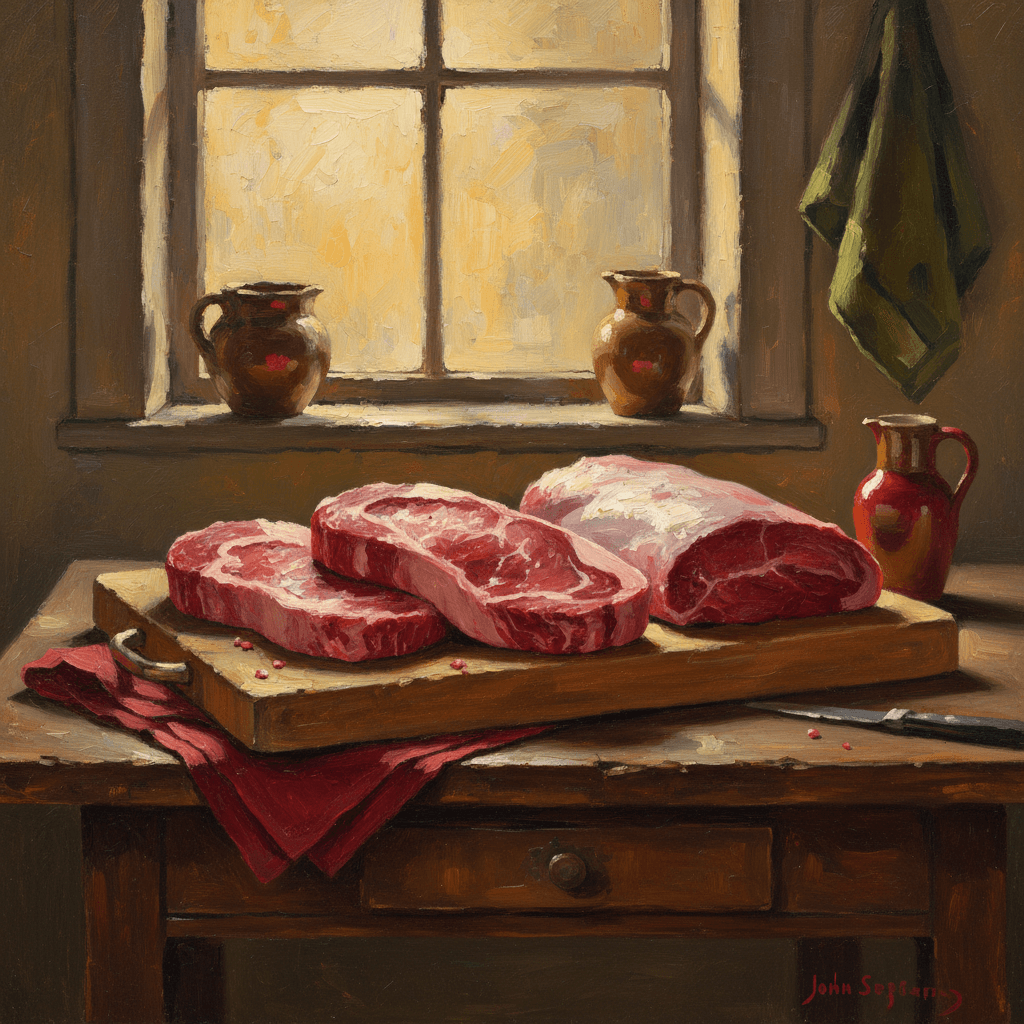
Beef is halal in Islam — but only when it is slaughtered correctly. Cattle are among the animals explicitly permitted in the Quran, so beef itself is not inherently haram. The question is not whether beef is allowed, but whether the specific beef in front of you was prepared according to Islamic guidelines.
If the answer to that question is yes, eat it with confidence. If the answer is no — or you genuinely do not know — then that beef is haram for you.
Quick Answer: Beef is halal by default. Cattle are explicitly permitted in Surah Al-Ma'idah 5:1. Beef becomes haram when the animal was not slaughtered according to Islamic rules — most commonly because Allah's name was not mentioned, the blood was not drained, or the animal was not killed by a Muslim or People of the Book. Always look for reliable halal certification.
Want to check whether a specific food or product is halal? Use our Haram Checker for an instant ruling.
The Evidence from the Quran
The permissibility of beef is not a matter of scholarly debate — it is settled by direct Quranic text. Allah (SWT) says at the opening of Surah Al-Ma'idah:
أُحِلَّتْ لَكُم بَهِيمَةُ الْأَنْعَامِ
Uhillat lakum bahimatul-an'am
"Lawful for you are animals of grazing livestock." (Surah Al-Ma'idah, 5:1)
The word الْأَنْعَامِ (al-an'am) refers specifically to cattle, camels, sheep, and goats — the four categories of grazing livestock. Beef is squarely within this permission.
The same surah, along with Surah Al-Baqarah, also specifies what is prohibited:
إِنَّمَا حَرَّمَ عَلَيْكُمُ الْمَيْتَةَ وَالدَّمَ وَلَحْمَ الْخِنزِيرِ وَمَا أُهِلَّ بِهِ لِغَيْرِ اللَّهِ
Innama harrama alaykumul-maytata wad-dama wa lahmal-khinziri wa ma uhilla bihi li-ghayri-llah
"He has only forbidden you carrion, blood, the flesh of swine, and that over which any name other than Allah's has been invoked." (Surah Al-Baqarah, 2:173)
Beef does not appear on this list. But notice what the verse says makes meat haram: being carrion (already dead), having blood not drained, and being slaughtered in a name other than Allah's. This is precisely why the method of slaughter matters so much for beef.
Allah also addresses the importance of mentioning His name directly:
فَكُلُوا مِمَّا ذُكِرَ اسْمُ اللَّهِ عَلَيْهِ
Fakulu mimma dhukira-smullahi alayh
"So eat of that over which the name of Allah has been mentioned." (Surah Al-An'am, 6:118)
These verses together establish the framework: cattle are permitted, but the act of slaughter must meet specific conditions to keep the meat halal.
The Conditions for Halal Slaughter (Dhabihah)
The Islamic method of slaughter is called dhabihah (ذبيحة). For beef to be halal, the following conditions must be met at the time of slaughter:
1. Mention of Allah's Name
The slaughterer must say بِسْمِ اللَّهِ (Bismillah — "In the name of Allah") at the moment of cutting. Most scholars also accept بِسْمِ اللَّهِ اللَّهُ أَكْبَرُ (Bismillah Allahu Akbar). The intention is to dedicate the act to Allah alone, not to any other deity or purpose.
If the name of Allah is deliberately omitted, the meat is haram. If it was forgotten unintentionally, there is a difference of opinion — the majority (Hanafi, Maliki, Shafi'i) hold that an unintentional omission does not invalidate the slaughter, though the Hanbali school is stricter on this point.
2. The Correct Cut
The slaughterer must sever the trachea (windpipe), esophagus, and both jugular veins in a single, swift motion using a sharp knife. The goal is to cause death as quickly and painlessly as possible while allowing the blood to drain freely.
The spine must not be cut through before the animal dies. The animal must be alive — not already dead or dying from another cause — at the time the cut is made.
3. Blood Must Be Fully Drained
Blood is explicitly prohibited in 2:173. After the cut, the animal must be positioned to allow full drainage of blood. This is one of the reasons Islamic slaughter requires the animal to be bled out rather than killed by electric shock alone.
4. The Slaughterer Must Be Muslim or from the People of the Book
The person performing the slaughter must be a Muslim, a Christian, or a Jew (the People of the Book — Ahl al-Kitab). The Quran permits the food of the People of the Book in Surah Al-Ma'idah 5:5. Meat slaughtered by an atheist, a polytheist, or someone who invokes another deity is not halal.
5. The Animal Must Be a Permitted Species
This condition is already met for beef — cattle are explicitly halal in the Quran. But this condition becomes relevant when evaluating other meats.
Scholar Opinions on Common Situations
Beef in Non-Muslim Countries
If you are living in or visiting a country where the majority of butchers are non-Muslim, the beef at a standard supermarket is almost certainly not halal. Industrial slaughterhouses in non-Muslim countries do not follow dhabihah conditions — the name of Allah is not mentioned, and the slaughter method typically involves stunning followed by a neck cut rather than the prescribed Islamic method.
The solution is simple: buy from a certified halal butcher or look for a credible halal label. Many countries now have halal certification bodies that audit slaughterhouses. Scholars generally agree that certified halal meat from a trustworthy certification is permissible.
Stunning Before Slaughter
Pre-slaughter stunning — using electricity, a captive bolt, or gas to render the animal unconscious before cutting — is a significant debate among contemporary scholars.
Scholars who permit it argue that if the animal is still alive when the dhabihah cut is made, the conditions are technically met. Several Muslim-majority countries and halal certification bodies accept electrical stunning for this reason.
Scholars who prohibit it argue that stunning can cause death before the cut, meaning the animal becomes carrion (maytah), which is haram. They also raise concerns about the bismillah not being said over each individual animal in industrial settings.
If you want to be safe, look for hand-slaughtered (non-stunned) halal certification. This is the most conservative and widely accepted position across all four schools.
Machine Slaughter
When a machine performs the cutting, can it be halal? Most scholars who permit machine slaughter require that:
- A Muslim operates or oversees the machine
- The bismillah is recited at the start of operations (not necessarily over each individual animal)
- The machine produces a clean cut in the correct location
This is accepted by some halal bodies but rejected by others. For the most cautious approach, hand-slaughtered beef is preferable.
Meat from People of the Book
The Quran (5:5) explicitly permits the food of Christians and Jews. Classical scholars used this to permit meat slaughtered by a Jewish or Christian butcher, even without a Muslim present, as long as the slaughter was in the name of God and not for idolatrous purposes.
In today's context, many scholars are cautious about applying this ruling broadly to industrially produced meat in non-Muslim countries, since the conditions of proper slaughter and the invocation of God's name are not reliably met in most commercial settings. The scholarly consensus today tends toward requiring halal certification rather than relying on this principle alone for factory-farmed beef.
Halal and Haram Topic Guide
Explore general information about food, activities, and daily life
Free Islamic Tools
See all →Common Questions
Is beef jerky halal?
Beef jerky can be halal if the beef used in it was halal-slaughtered and no haram ingredients (like pork-based gelatin or alcohol-based flavoring) were added in processing. Always check the ingredient list and look for halal certification on packaged beef jerky. For a broader look at packaged food ingredients, see our guide on is gelatin haram.
Is beef broth or beef extract haram?
The ruling on beef broth follows the ruling on the beef itself. If the beef used to make the broth was halal, the broth is halal. If it was not halal-slaughtered, the broth is haram. This also applies to beef-flavored products — check whether they use actual beef extract or artificial flavoring.
What about beef in restaurants?
In a Muslim-majority country with reliable halal oversight, restaurant beef is generally safe to assume halal. In a non-Muslim country, ask the restaurant whether they source halal-certified beef. For a specific example of how to evaluate a popular chain, see is McDonald's haram. Many halal restaurants in Western countries take certification seriously and will be happy to confirm. If you cannot confirm, it is safer to avoid.
Is wagyu or premium beef haram?
The cut, grade, or quality of beef has no bearing on whether it is halal. A wagyu steak is subject to the same dhabihah conditions as any other beef. What matters is whether it was slaughtered correctly — not how expensive it is.
For similar questions about other foods and their Islamic ruling, see our articles on is crab haram and is sushi haram.
Summary
Beef is halal by default in Islam. Cattle are explicitly permitted in Surah Al-Ma'idah 5:1, and beef does not appear on the Quranic list of prohibited foods. However, beef can become haram when it is not slaughtered according to Islamic dhabihah rules — specifically when Allah's name is not mentioned, when blood is not properly drained, or when the animal was already dead at the time of the cut.
The practical implication is straightforward: when buying beef, look for reliable halal certification. When eating out, ask about the source of the meat. And when in doubt, follow the Prophet's guidance (peace be upon him) to leave what makes you doubtful for what does not.
Use our Haram Checker to verify other foods and ingredients quickly.
والله أعلم — Allah knows best.
Frequently Asked Questions
Is beef halal or haram in Islam?
Beef is halal by default in Islam. Cattle are explicitly permitted in the Quran (5:1). However, beef becomes haram if the animal was not slaughtered according to Islamic guidelines — specifically, if Allah's name was not mentioned, if the blood was not properly drained, or if the animal was already dead before slaughter.
What makes beef haram?
Beef becomes haram when: (1) Allah's name was not mentioned at the time of slaughter, (2) the animal was not slaughtered by a Muslim or a person from the People of the Book, (3) the blood was not fully drained, (4) the animal was already dead before slaughter, or (5) it was slaughtered in the name of other than Allah.
Is beef from non-Muslim countries halal?
Beef from non-Muslim countries can be halal if it comes from a certified halal slaughterhouse where the proper conditions are met. Beef from a regular supermarket in a non-Muslim country is generally not considered halal unless it carries a reliable halal certification, because the slaughter conditions are typically not met.
Is machine-slaughtered beef halal?
Machine slaughter of beef is a debated topic. Many scholars accept it if a Muslim recites the name of Allah over the machine before it begins operating. Other scholars require individual recitation over each animal. It is safest to look for hand-slaughtered halal certification if you want to avoid this debate.