- Published on
Dua for Breaking Fast in Ramadan — Iftar Dua with Arabic Text
- Authors

- Name
- Sih C.
- Role
- Founder & Islamic Content Researcher • Islamful
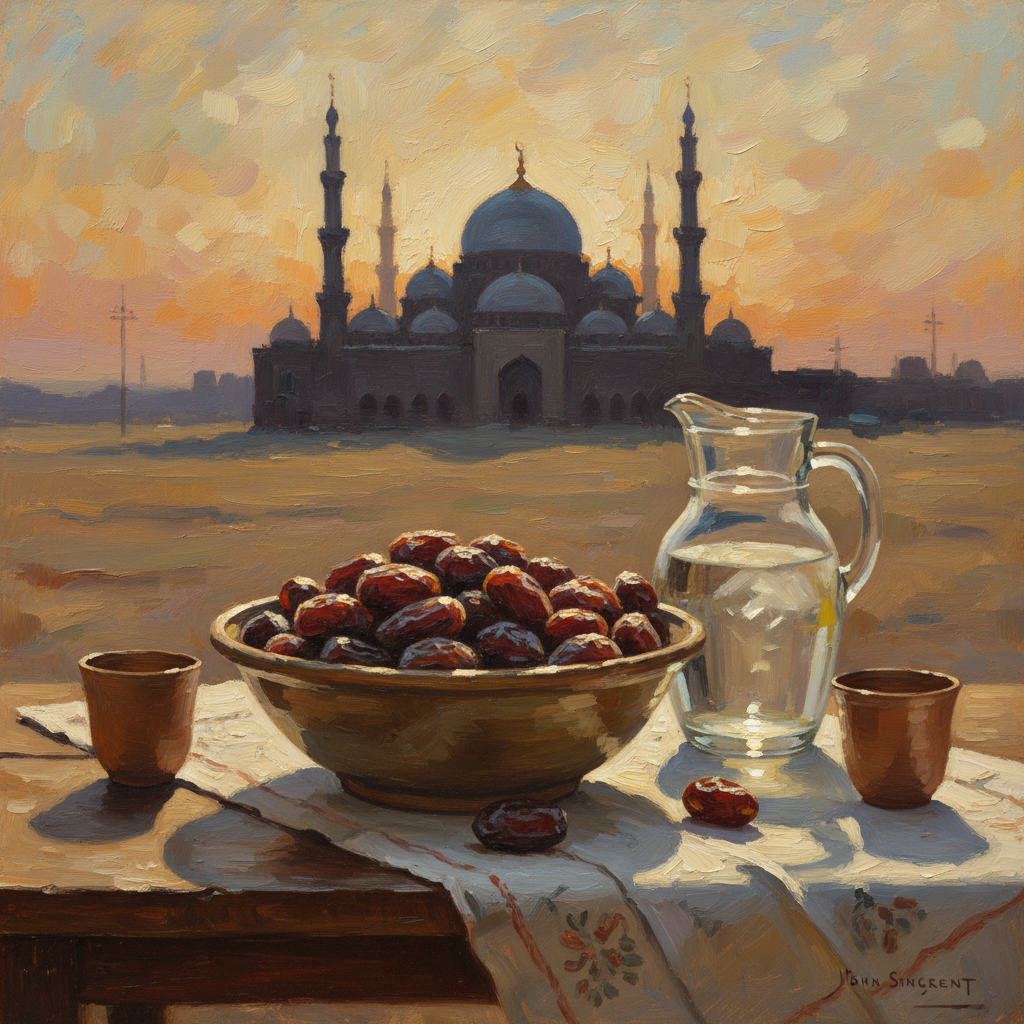
Here is the dua for breaking your fast in Ramadan — in Arabic, transliteration, and full meaning — along with the special status of iftar supplication during the blessed month.
The Primary Dua for Breaking Fast in Ramadan
This is the dua narrated directly from the Prophet ﷺ when he broke his fast. It is the stronger narration and is preferred by many scholars:
Arabic:
ذَهَبَ الظَّمَأُ وَابْتَلَّتِ الْعُرُوقُ وَثَبَتَ الْأَجْرُ إِنْ شَاءَ اللَّهُ
Transliteration:
Dhahaba al-ẓama'u wabtallatil-ʿurūqu wa thabata al-ajru in shā'allāh
Translation:
"The thirst has gone, the veins are moistened, and the reward is confirmed, if Allah wills."
Source: Narrated by Abu Dawud, 2357 — graded as hasan by al-Albani and other hadith scholars
This dua captures the reality of iftar: the physical relief of thirst quenched, and the spiritual certainty that the day's fasting has earned its reward with Allah ﷻ. The addition of in sha Allah is not a sign of doubt but an expression of proper Islamic etiquette in all matters of the unseen.
The Second Iftar Dua
A second well-known supplication, also narrated in Abu Dawud, is:
Arabic:
اللَّهُمَّ لَكَ صُمْتُ وَعَلَى رِزْقِكَ أَفْطَرْتُ
Transliteration:
Allāhumma laka ṣumtu wa ʿalā rizqika afṭartu
Translation:
"O Allah, for You I have fasted, and with Your provision I break my fast."
Source: Narrated by Abu Dawud, 2358 — graded as mursal (a gap in the chain) but widely practiced and accepted across madhabs
A longer version also in circulation adds: wa bika āmantu wa ʿalayka tawakkaltu — "and in You I have believed, and upon You I have relied." Both the short and longer versions are commonly recited by Muslims worldwide.
Looking for more duas? Browse our complete Dua Collection — organized by occasion with Arabic text, transliteration, and translation.
Why Iftar Dua in Ramadan Is Special
The Prophet ﷺ said:
"The fasting person has a supplication at the time of breaking fast that is not rejected." (Narrated by Ibn Majah, 1753 — graded as hasan)
This hadith establishes that the moment of iftar — every single day of Ramadan — is one of the most powerful times for accepted supplication in the Islamic calendar. Scholars explain this on the basis that the fasting person has spent the day in a state of obedience, hunger, and thirst for Allah's sake. That state of sincere devotion makes the heart receptive and the supplication worthy of acceptance.
Ibn Majah and other scholars noted that this applies to both the one who fasts and breaks the fast in private and the one sitting at a large iftar gathering. What matters is the sincerity of the heart at that moment, not the setting.
Do not let this moment pass. When the adhan sounds and you reach for your date or your water — pause. Recite the dua first. Those few seconds at sunset carry a weight unlike most other moments in the day.
The Sunnah Way to Break the Fast
The Prophet ﷺ broke his fast in a specific order. Following this order is itself an act of worship:
- Recite the dua before eating or drinking
- Break the fast with dates — the Prophet ﷺ broke his fast with fresh dates (rutab), or if unavailable, dried dates (tamr), or water
- Pray Maghrib — the Prophet ﷺ would pray Maghrib before eating his iftar meal
- Eat the main iftar meal — after Maghrib
The Prophet ﷺ said: "When one of you breaks his fast, let him break it with dates, for they are a blessing. If he cannot find dates, let him break it with water, for it is purifying." (Narrated by Abu Dawud, 2355; Tirmidhi, 694)
Making the Most of Iftar Dua in Ramadan
The moment of breaking fast is not just about the prescribed dua — it is an open window for all personal supplications. Here is how to use it:
- Recite one of the duas above first — fulfil the Sunnah
- Then make personal duas in your own words, in any language, for anything you need
- Pray for your family — iftar gatherings are among the best times to include those you love in your supplication
- Pray for the ummah — Ramadan is the month of collective mercy; remember Muslims around the world in your dua
- Do not rush — the window for dua at iftar extends until you begin eating; use it fully
When to Recite the Iftar Dua
Recite the dua the moment the Maghrib adhan is called or when you confirm the sun has set. Do not delay your iftar. The Prophet ﷺ said:
"The people will remain in good condition as long as they hasten the breaking of the fast." (Narrated by Bukhari, 1957; Muslim, 1098)
Delaying iftar without a valid reason is disliked. The moment of sunset is the moment of breaking the fast — honour it with the dua immediately.
Use our Prayer Times tool to find the exact Maghrib time in your city each day of Ramadan.
أَصْبَحْنَا وَأَصْبَحَ الْمُلْكُ لِلَّهِ، وَالْحَمْدُ لِلَّهِ، لَا إِلَهَ إِلَّا اللَّهُ وَحْدَهُ لَا شَرِيكَ لَهُ، لَهُ الْمُلْكُ وَلَهُ الْحَمْدُ وَهُوَ عَلَى كُلِّ شَيْءٍ قَدِيرٌ
Asbahna wa asbahal-mulku lillah, walhamdu lillah, la ilaha illallahu wahdahu la shareeka lah, lahul-mulku walahul-hamd, wahuwa 'ala kulli shay'in qadeer
We have reached the morning and at this very time all sovereignty belongs to Allah. All praise is for Allah. None has the right to be worshipped except Allah alone, without partner. To Him belongs all sovereignty and praise, and He is over all things omnipotent.
Abu Dawud 4:317
اللَّهُمَّ بِكَ أَصْبَحْنَا، وَبِكَ أَمْسَيْنَا، وَبِكَ نَحْيَا، وَبِكَ نَمُوتُ، وَإِلَيْكَ النُّشُورُ
Allahumma bika asbahna, wa bika amsayna, wa bika nahya, wa bika namootu, wa ilaykan-nushoor
O Allah, by Your leave we have reached the morning and by Your leave we have reached the evening, by Your leave we live and die, and unto You is our resurrection.
At-Tirmidhi 5:466
اللَّهُمَّ إِنِّي أَسْأَلُكَ الْعَافِيَةَ فِي الدُّنْيَا وَالْآخِرَةِ، اللَّهُمَّ إِنِّي أَسْأَلُكَ الْعَفْوَ وَالْعَافِيَةَ فِي دِينِي وَدُنْيَايَ وَأَهْلِي وَمَالِي
Allahumma inni as'alukal-'afiyah fid-dunya wal-akhirah. Allahumma inni as'alukal-'afwa wal-'afiyah fi deeni wa dunyaya wa ahli wa maali
O Allah, I ask You for well-being in this world and the next. O Allah, I ask You for pardon and well-being in my religious and worldly affairs, and my family and my wealth.
Abu Dawud 4:316, Ibn Majah 2:332
Free Islamic Tools
See all →Related Duas
- Dua for Breaking Fast — the complete iftar dua guide with all narrated variations
- Dua for Fasting — duas for the full fasting day: niyyah, during the fast, and iftar
- Dua for Beginning Fasting — the niyyah and suhoor supplications
- Dua for Laylatul Qadr — the most powerful supplication of the entire month
- Prayer Times — know exactly when Maghrib enters so you never miss the iftar dua window
Frequently Asked Questions
What is the dua for breaking fast in Ramadan?
The most authentic dua for breaking the fast is: 'Dhahaba al-zama'u wabtallatil-ururqu wa thabata al-ajru in sha Allah' — 'The thirst has gone, the veins are moistened, and the reward is confirmed, if Allah wills.' (Abu Dawud, 2357). A second widely recited dua is: 'Allahumma laka sumtu wa ala rizqika aftartu' — 'O Allah, for You I have fasted, and with Your provision I break my fast.'
Is the dua for breaking fast in Ramadan different from a regular iftar dua?
No. The same iftar duas apply whether you are breaking a Ramadan fast or a voluntary fast. The Ramadan context adds special weight — the Prophet said the fasting person has a supplication at iftar that is not rejected — but the words of the dua are the same year-round.
When exactly should the iftar dua be recited?
Recite the dua immediately when the Maghrib adhan is called or when the sun sets — before eating or drinking. Break the fast with a date or a sip of water, then recite the dua. Do not delay the iftar; the Prophet said: The people will remain in good condition as long as they hasten the iftar.
Does the dua at iftar time have special power in Ramadan?
Yes. The Prophet said: 'The fasting person has a supplication at the time of breaking fast that is not rejected.' (Ibn Majah, 1753). In Ramadan this blessing is amplified — every night of the month carries extra reward, and the moment of iftar is among the most accepted times for dua in the entire year.