- Published on
Are Musical Instruments Haram in Islam? A Detailed Ruling
- Authors

- Name
- Sih C.
- Role
- Founder & Islamic Content Researcher • Islamful
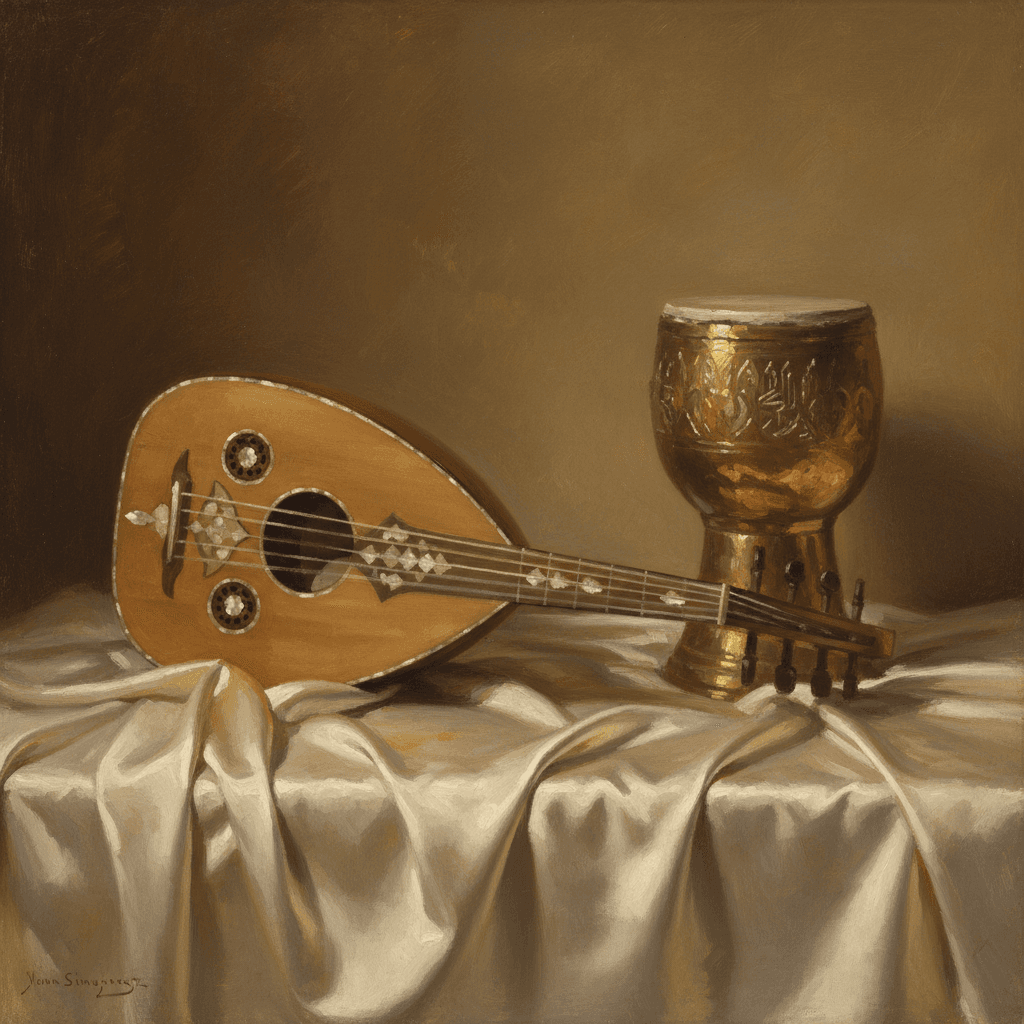
The question of musical instruments sits at the heart of one of the longest-running debates in Islamic jurisprudence. Can a Muslim play the guitar? Is the oud forbidden? What about a simple drum? These questions matter to millions of Muslims, and the answers are not as simple as either side of the debate often admits.
This article focuses specifically on instruments — if you want the broader question of music in general, see is music haram. For singing without instruments, see is singing haram.
Quick Answer: The majority of classical scholars ruled that musical instruments (ma'azif) are haram. The duff (frame drum) is explicitly permitted in authentic hadith. A minority of scholars — including Ibn Hazm, al-Ghazali, and al-Qaradawi — permit instruments when the content is clean and no sin results. This is a genuine scholarly disagreement with strong evidence on both sides.
The Core Quranic Evidence
The Quran does not mention instruments by name, but scholars who prohibit them cite one key verse:
وَمِنَ النَّاسِ مَن يَشْتَرِي لَهْوَ الْحَدِيثِ لِيُضِلَّ عَن سَبِيلِ اللَّهِ
Wa min an-nasi man yashtari lahw al-hadith li-yudilla 'an sabil-illah
"And of the people is he who buys the amusement of speech to mislead others from the way of Allah." — Surah Luqman, 31:6
The phrase "lahw al-hadith" (idle/vain speech) is the key. Ibn Mas'ud (may Allah be pleased with him), one of the Prophet's ﷺ closest companions, swore by Allah three times that this verse refers to singing. The same interpretation is narrated from Ibn Abbas and Jabir ibn Abdullah (Tafsir al-Tabari). Classical commentators overwhelmingly linked this verse to music and instruments.
It is worth noting, however, that the verse condemns using speech to mislead from the path of Allah — some scholars argue the condemnation is tied to the intent of leading people astray, not to music itself.
The Key Hadith Evidence
The Bukhari Hadith (5590)
The most frequently cited hadith on instruments is:
"There will be among my Ummah people who will regard as permissible adultery, silk (for men), alcohol, and musical instruments (ma'azif)." — Narrated by al-Bukhari, 5590
Scholars who prohibit instruments argue this hadith is decisive: it groups ma'azif (musical instruments) with things that are unambiguously haram. The word ma'azif in Arabic refers to stringed and wind instruments, though some scholars extend it to all instruments.
Ibn Hazm, however, noted that this hadith is recorded in Bukhari in a technically mu'allaq (suspended) form — meaning it has a break in the chain of transmission in Bukhari's own compilation. He argued it cannot be used as definitive proof. Most hadith scholars responded that the supporting chains elsewhere establish its authenticity, but the debate has never fully closed.
The Duff Hadith — The Clear Exception
Regardless of their position on instruments broadly, virtually all scholars agree on the following:
The Prophet ﷺ said: "Announce this marriage. Hold it in the mosques and beat the duff for it." — Narrated by al-Tirmidhi, 1089
Two girls were singing and playing the duff on the day of Eid. Abu Bakr tried to stop them. The Prophet ﷺ said: "Leave them, O Abu Bakr, for these are the days of Eid." — Narrated by al-Bukhari, 949
The duff — a simple hand-held frame drum, essentially a tambourine without cymbals — is halal by explicit prophetic permission. This is not debated.
What Is Ma'azif? Classifying Instruments
The Arabic word ma'azif (معازف) is the term used in the primary hadith evidence. Classical scholars defined it broadly as stringed and wind instruments. Modern scholars generally extend it to include all musical instruments except the duff. The categories scholars typically discuss:
| Instrument Type | Classical Ruling | Notes |
|---|---|---|
| Duff (frame drum) | Halal — unanimous | Explicitly permitted in authentic hadith |
| String instruments (oud, guitar, violin) | Majority: haram | Under the general prohibition of ma'azif |
| Wind instruments (flute, nay, trumpet) | Majority: haram | Included in ma'azif by most scholars |
| Percussion (drums, tabla) | Disputed | Some permit; others restrict permission to duff only |
| Digital instruments / software | Debated (modern) | Scholars apply qiyas to the instrument being simulated |
Scholarly Opinions in Detail
| Scholar / School | Ruling | Key Reasoning |
|---|---|---|
| Majority (Hanafi, Shafi'i, Hanbali) | Haram | Bukhari 5590 + Luqman 31:6 + statements of Companions |
| Some Maliki scholars | Permissible with conditions | No absolute Quranic prohibition; hadith evidence disputed |
| Ibn Hazm (Zahiri) | Permissible | Bukhari 5590 chain is technically mu'allaq; no clear prohibition |
| Al-Ghazali | Permissible unless it leads to sin | Instruments are neutral; only sinful context makes them haram |
| Yusuf al-Qaradawi (modern) | Permissible if content is clean | Islam does not prohibit lawful enjoyment; prohibition requires clear evidence |
The Majority Position
The Hanafi, Shafi'i, and Hanbali schools all ruled instruments haram. Their case rests on three pillars: the Bukhari hadith grouping instruments with haram items, the Companions' interpretation of Surah Luqman, and a large number of statements from early scholars condemning musical gatherings. This is the dominant view in classical Islamic jurisprudence and represents the position of the overwhelming majority of pre-modern scholars.
The Minority Position
Ibn Hazm argued that a prohibition must be established by unambiguous, authentic evidence — and that the chain issues in the main hadith are sufficient grounds for doubt. Al-Ghazali took a different approach: he accepted that some instruments are disliked but argued that the prohibition is contextual, not absolute. Al-Qaradawi, one of the most influential modern jurists, holds that music with clean, wholesome content that does not lead to sin is permissible, citing the Islamic principle that everything is halal unless explicitly prohibited.
Both positions represent legitimate ijtihad (scholarly reasoning) and have been held by scholars of high standing.
When Instruments Become Haram by Consensus
Even scholars who permit instruments agree they become haram when:
- Used alongside other haram activities — alcohol, free mixing with prohibited behavior, etc.
- The accompanying lyrics promote sin — alcohol, drugs, adultery, or disbelief
- They distract from obligatory worship — if playing an instrument causes you to miss salah or neglect the Quran
- They lead to excessive time-wasting — hours consumed in entertainment at the expense of dhikr and beneficial deeds
This means that even on the most permissive scholarly opinion, a Muslim's relationship with instruments must remain within limits. The ruling is not "anything goes."
Instruments and Related Questions
Is singing haram? Singing is treated as a separate question from instruments. Most scholars who prohibit instruments still permit vocal-only singing with clean content. See is singing haram for the full analysis.
Are nasheeds with instruments halal? Islamic nasheeds that use instruments — especially string or keyboard instruments — are contested. Scholars who permit clean-content music would allow them; scholars who prohibit instruments would not permit even devotional music that uses them. Vocal-only nasheeds (without instruments) are permissible by near-consensus. See is it haram to listen to nasheed.
What about the nay (flute)? The nay is a wind instrument with deep roots in Islamic mystical tradition (Sufi poetry often uses it as a metaphor for longing for Allah). Despite this cultural association, most classical scholars still classified it under the general prohibition of wind instruments. Sufi orders that use the nay consider this permissible under the minority scholarly view.
Unsure about a specific instrument or musical situation? Use the AI Halal Checker for an instant answer with Islamic references.
Halal and Haram Topic Guide
Explore general information about food, activities, and daily life
Free Islamic Tools
See all →Summary
The ruling on musical instruments in Islam comes down to which scholarly tradition you follow:
- The majority of classical scholars (Hanafi, Shafi'i, Hanbali) ruled that musical instruments are haram based on the hadith in Sahih al-Bukhari (5590) and the Companions' interpretation of Surah Luqman 31:6
- The duff (frame drum) is halal by explicit prophetic permission and is not debated
- A minority of scholars — including Ibn Hazm, al-Ghazali, and al-Qaradawi — permit instruments when the music has clean content and causes no sin, arguing the prohibition lacks unambiguous textual support
- All scholars agree that instruments become haram when combined with other sins, when their lyrics promote disobedience, or when they distract from obligatory worship
- Digital music production and modern instruments are judged by analogy to classical rulings, with no independent textual evidence either way
If you follow the majority opinion, the safest path is to avoid instruments and limit music to the duff and vocal nasheeds. If you follow a scholar who permits instruments with conditions, ensure the content is clean and your obligations to Allah are not compromised.
For more Islamic rulings and daily tools, explore the Islamful blog or check your prayer times.
والله أعلم — And Allah knows best.
Frequently Asked Questions
Is playing the duff (frame drum) halal?
Yes. The duff is explicitly permitted in multiple authentic hadith. The Prophet ﷺ allowed it for weddings, Eid celebrations, and joyful occasions. This is one of the very few instruments on which all scholars agree.
Are string instruments like the guitar or oud haram?
The majority of classical scholars considered string instruments haram under the category of ma'azif (musical instruments). Some scholars — including al-Ghazali and Ibn Hazm — disputed this prohibition, and a minority of modern scholars permit string instruments when the content played is wholesome. The safer position is to avoid them, though this is a matter of genuine scholarly disagreement.
Is digital music production haram?
Scholars who consider musical instruments haram extend this ruling to digital production that replicates or replaces those instruments. Scholars who permit clean-content music would also permit its digital production. There is no classical ruling on software specifically, so modern jurists apply analogy (qiyas) to the instruments being simulated.
Can I learn to play an instrument as a skill without performing music publicly?
Scholars who prohibit instruments generally prohibit both performance and learning, since the means to a haram act is itself haram. Scholars who permit music with conditions would allow learning provided the music played has permissible content and does not lead to sin.