- Published on
Is Drawing Haram in Islam? The Full Ruling Explained
- Authors
- Name
- Sih C.
- Role
- Founder & Islamic Content Researcher • Islamful
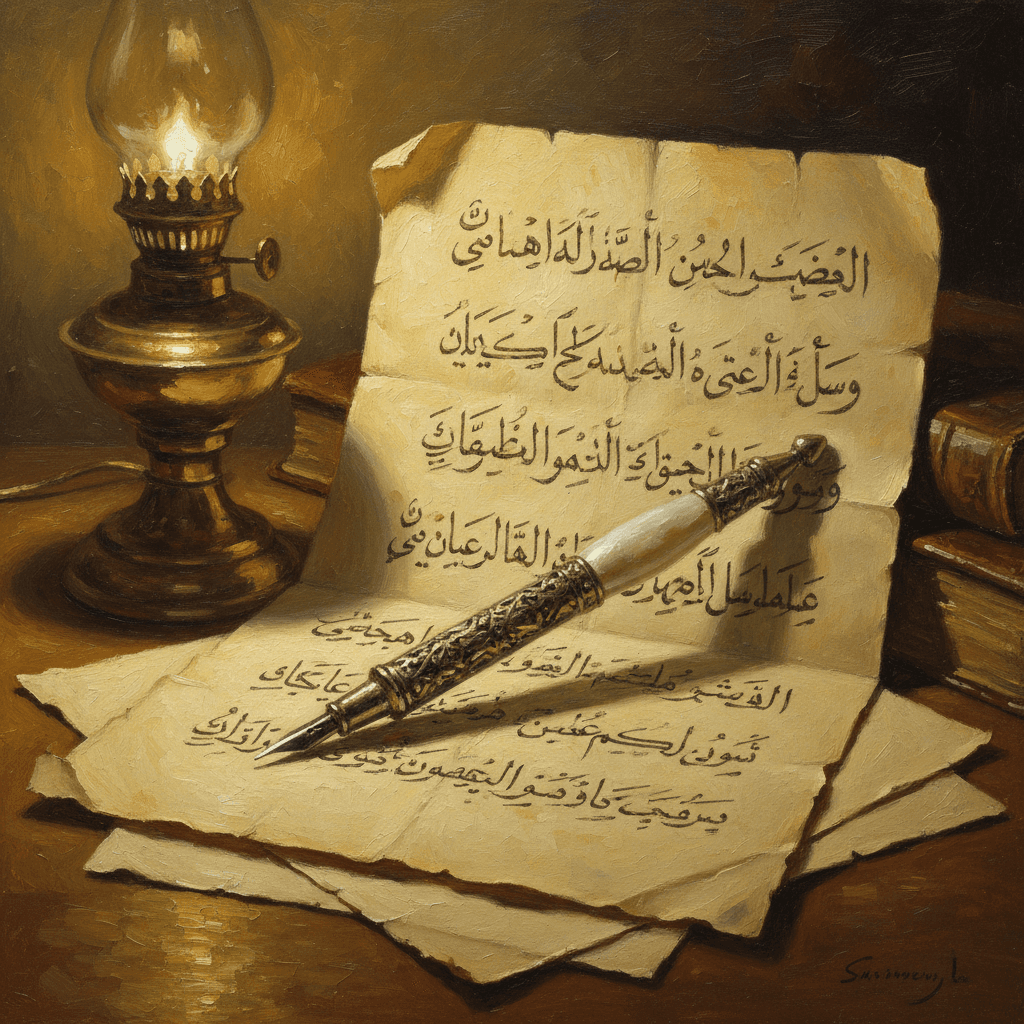
Drawing is one of the most common creative outlets, and many Muslims wonder whether it is permissible in Islam. The answer is not a simple yes or no — it depends on what you draw.
The majority of scholars rule that drawing living beings (humans and animals) with complete features is haram, based on authentic hadith that warn image-makers of punishment on the Day of Judgment. However, drawing landscapes, objects, geometric patterns, calligraphy, and abstract art is permissible by scholarly consensus.
Quick Answer: Drawing animate beings (humans, animals) with full features is haram according to the majority of scholars. Drawing inanimate objects — landscapes, buildings, trees, geometric patterns, and Islamic calligraphy — is halal. Some contemporary scholars permit drawings of living beings if key features (like the face) are omitted or for educational necessity.
Want to check if something else is halal or haram? Try our free Haram Checker — instant AI-powered rulings with sources.
Islamic Ruling Checker
Check the ruling on anything — food, activities, lifestyle, and more
The Evidence from Quran and Hadith
The primary evidence on this topic comes from several authentic hadith. The Prophet Muhammad (peace be upon him) spoke clearly about image-making in multiple narrations.
The most direct hadith is reported by Ibn Abbas (may Allah be pleased with him):
"Every image-maker will be in the Fire. A soul will be placed for every image he made, and it will punish him in Hell." — Narrated by al-Bukhari, 2225; Muslim, 2110
In another well-known narration, the Prophet ﷺ said:
مَنْ صَوَّرَ صُورَةً فِي الدُّنْيَا كُلِّفَ يَوْمَ الْقِيَامَةِ أَنْ يَنْفُخَ فِيهَا الرُّوحَ وَلَيْسَ بِنَافِخٍ
Man sawwara suratan fi al-dunya kullifa yawm al-qiyamati an yanfukha fiha al-ruha wa laysa bi-nafikh
"Whoever makes an image in this world will be asked to breathe life into it on the Day of Judgment, and he will never be able to do so." — Narrated by al-Bukhari, 5963; Muslim, 2108
Aisha (may Allah be pleased with her) also reported:
"The Prophet ﷺ entered upon me and there was a curtain with images on it. His face changed color (showing displeasure). He said: 'O Aisha, the people who will be most severely punished on the Day of Judgment are those who try to imitate the creation of Allah (SWT).'" — Narrated by al-Bukhari, 5954; Muslim, 2107
These hadith are authentic and narrated in both Sahih al-Bukhari and Sahih Muslim, leaving no doubt about their reliability. The key phrase in the scholarly discussion is ذات الروح (dhat al-ruh — "that which has a soul"), which is why the prohibition specifically targets images of animate beings, not all images.
Scholar Opinions
The scholars of Islam have discussed this topic extensively across all four madhabs.
| Scholar / School | Ruling on Animate Beings | Ruling on Landscapes / Objects |
|---|---|---|
| Hanafi | Haram (full-featured images) | Halal |
| Maliki | Haram (three-dimensional and flat) | Halal |
| Shafi'i | Haram (if complete with features) | Halal |
| Hanbali | Haram (strictly) | Halal |
| Ibn Taymiyyah | Haram (particularly statues) | Halal |
| Some contemporary scholars | Permitted with conditions | Halal |
The majority position is clear: creating images of living beings with complete features is prohibited. This includes drawings, paintings, and sculptures of humans and animals. The prohibition is strongest for three-dimensional forms (statues and sculptures) and extends to flat images (drawings and paintings) according to most scholars.
However, all four schools agree that drawing inanimate objects is completely permissible. Trees, mountains, rivers, buildings, geometric designs, and abstract patterns fall outside the scope of the hadith entirely. This is why Islamic art historically flourished through calligraphy, arabesque patterns, and architectural design rather than portraiture. For a related question where the same content-based analysis applies, see is anime haram.
Some contemporary scholars, including Yusuf al-Qaradawi and others, hold a more lenient view. They argue that the hadith prohibition was specifically aimed at preventing idol worship, which was the context of 7th-century Arabia. They permit drawings of living beings when there is no intent of worship, especially for educational purposes such as textbooks, medical illustrations, and children's learning materials.
Conditions and Gray Areas
Several situations fall into a gray area where scholars differ:
Incomplete images. Many scholars — including those who prohibit drawing animate beings — say that if the image is missing essential features (such as the head or face), it is no longer considered a prohibited image. Imam al-Nawawi mentioned this position. This means stick figures, faceless drawings, or silhouettes may be permissible.
Children's drawings. Some scholars are lenient with young children drawing people and animals, since children are not held accountable for religious rulings before puberty. However, parents are encouraged to guide them toward drawing permissible subjects.
Educational and medical necessity. Drawings used for anatomy textbooks, medical training, or scientific education are permitted by many scholars under the principle of necessity (darurah). This is a recognized exception in Islamic jurisprudence. For a broader overview of how necessity and context shape Islamic rulings, see our halal vs haram guide.
Digital art and photography. This is a separate discussion, but many contemporary scholars distinguish between hand-drawn images and photographs or digital captures, arguing the hadith applies to manual creation of images, not mechanical reproduction. For more on modern rulings, check the Islamful blog for related articles.
Common Questions
Q: Is drawing faces specifically haram? Yes, according to the majority. The face is the most distinctive feature of a living being. Some scholars say that if you draw a body without a face, the prohibition is lifted. This is why you see some Muslim artists creating beautiful art of people with blank or obscured faces.
Q: Can I pursue art as a career in Islam? Absolutely. Islamic civilization produced some of the world's greatest art — calligraphy, geometric tilework, architecture, and textile design. You can build a fulfilling art career focusing on calligraphy, landscape art, abstract design, graphic design with non-figurative elements, and architectural illustration. The prohibition is narrow; the world of permissible art is vast.
Q: Is Islamic calligraphy considered drawing? Islamic calligraphy is not only halal but is considered one of the noblest Islamic art forms. Writing the words of Allah in beautiful script has been celebrated throughout Islamic history. It is entirely separate from the prohibition on image-making.
Not sure about a specific ruling? Use the Haram Checker to get an instant answer with references.
Free Islamic Tools
See all →Summary
The Islamic ruling on drawing is nuanced but not complicated:
- Drawing living beings (humans, animals) with complete features is haram according to the majority of scholars, based on authentic hadith in Bukhari and Muslim
- Drawing inanimate objects — landscapes, buildings, trees, patterns — is completely halal by consensus
- Islamic calligraphy, geometric art, and abstract art are permissible and have a celebrated tradition in Islam
- Incomplete images (without a face or head) may be permissible according to several scholars
- Educational necessity can be an exception for drawings of living beings
- The prohibition exists because image-making of animate beings imitates the creation of Allah, not because art itself is forbidden
Islam does not oppose creativity or beauty. It channels artistic expression away from imitating Allah's creation and toward the vast world of permissible art. Some of the most breathtaking art in human history — from the tiles of the Alhambra to Ottoman calligraphy — was produced by Muslims working within these boundaries. Related questions about figurines and collectibles follow the same framework — see are Labubus haram for how scholars apply these principles to modern products.
For more Islamic rulings and guides, explore the Islamful blog or check your daily prayer times.
والله أعلم — And Allah knows best.
Frequently Asked Questions
Is drawing animals haram in Islam?
The majority of scholars consider drawing animals with full features (eyes, mouth, complete form) to be haram, based on authentic hadith in Bukhari and Muslim that warn image-makers of severe punishment. However, some contemporary scholars allow it for educational purposes or if key features like the face are omitted or distorted.
Is drawing landscapes and nature halal?
Yes. Drawing landscapes, trees, mountains, rivers, buildings, geometric patterns, and any non-living objects is permissible by consensus of the scholars. The prohibition in the hadith specifically targets images of beings with souls (dhat al-ruh), not inanimate objects.
Can Muslims do Islamic calligraphy and abstract art?
Yes. Islamic calligraphy, geometric patterns, and abstract art are not only permissible but have a rich tradition in Islamic civilization. These art forms were developed precisely because Muslim artists channeled their creativity into non-figurative expression, producing some of the most celebrated art in human history.